A Short Evening Reset for the Walk from Work to Home
An evening reset for the walk from work to home can help you arrive with one clear next action, without turning the commute into another task.
The common mistake in an evening reset for the walk from work to home is treating the trip as a chance to finish the workday in your head. That can turn a walk into an unpaid meeting with yourself, leaving less attention for the people and practical needs waiting at home. Instead, use the changing surroundings to shift your focus outward.
How can the walk change your attention?
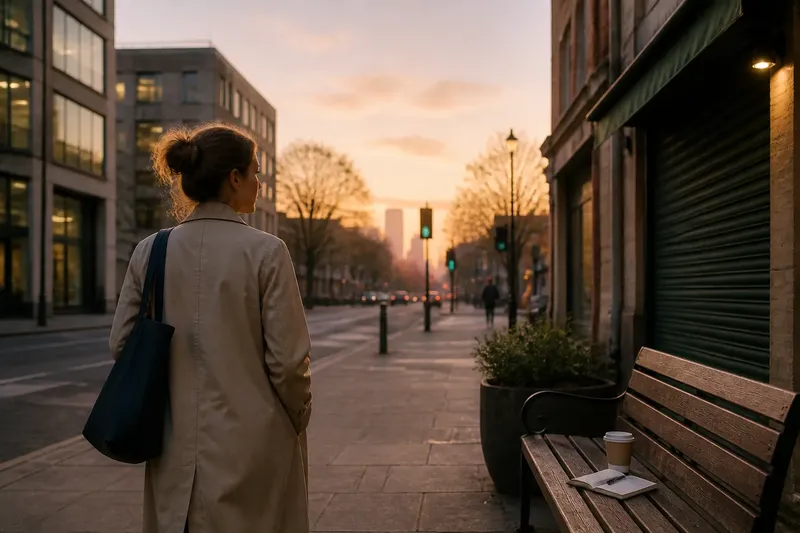
Rather than reviewing the day, notice a few physical details along the route: the pressure of your shoes on the pavement, a shop closing its shutters, or the changing light at an intersection. These are not cues you need to repeat in order. They are simply parts of the trip that can bring attention back from an unfinished email or tense exchange.
Let the walk remain an ordinary walk. If a work thought returns, you can recognize it without taking it apart, then notice what is around you again. A boundary sometimes begins with giving the next part of the day your attention, not with declaring work fully over.
What should you do with unfinished work?
Some tasks genuinely need a place in tomorrow’s plan. If one comes to mind, record the concrete next action when you are safely stopped—for example, “send the revised draft to Maya”—rather than carrying a vague instruction to remember everything. Then put the note away and return to the journey.
Imagine you are walking from an office after a tense conversation, and a draft still needs attention. You stop beside a bench, write “ask Jordan to clarify the delivery date” on a note, and leave the draft for tomorrow; your decision is to follow up on the conversation first, rather than mentally drafting both tasks on the way home. The visible result is a brief note with a clear action, while your attention can return to crossing safely and getting home.
If the thought is not actionable tonight, it may not need a note at all. You can let it remain unresolved until you are back in a setting where you can decide what to do.
How does this work on different commutes?
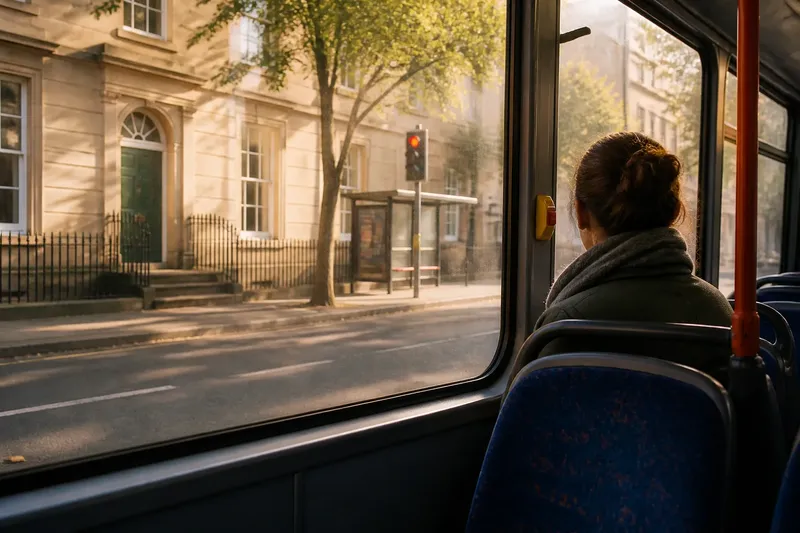
A walk offers changing sights and sounds, but the same shift can happen on a bus, train, or drive. On public transit, notice the movement from one stop to the next; while driving, keep your attention on traffic and save any note-taking for when you are parked.
If the route is crowded, noisy, or demanding, you do not have to create a quiet interval. Focus on the practical needs of the trip—finding your platform, watching for a crossing signal, or keeping a hand free on the stairs. A transition should fit the journey, not compete with it.
What questions help with an evening reset?
Do I need to act on this before I get home?
If the answer is yes, choose a safe place to stop and handle only that immediate matter. If not, leave it for a time and setting that suit the task.
What is the next visible thing I will do?
Pick an ordinary action, such as putting your keys in the bowl or washing your hands. A specific next action gives your attention somewhere to land without requiring you to feel a particular way.
What can I notice on this part of the route?
Choose something already present: the sound of the bus doors, the feel of the handlebars, or the trees along the sidewalk. If noticing makes you less attentive to traffic or other hazards, return to the practical demands of moving safely.
What if I need to keep working at home?
Name the next work action and the point at which you will pause to reconsider it. If you cannot set a clear boundary that evening, keep the transition modest: move from the commute to the next necessary task without asking the walk to solve the larger problem.
How can an evening reset stay practical?
Keep it flexible rather than building a routine with a required cue or sequence. You might notice a storefront, then turn your attention to the route; another day, you may simply focus on getting across a busy street and arriving home.
- Check whether a work thought requires action before you arrive; if it does, stop somewhere safe and handle only that matter, but if it does not, leave it for later.
- Check whether a reminder has a clear next action; if it does, write that action down when stopped, but if it does not, wait until you can clarify what it asks of you.
- Check whether looking at your phone would distract you from the route; if it would, keep the phone away and rely on memory only for immediate needs, but if you are safely stopped, make a brief note.
- Check whether the commute is demanding your full attention; if it is, focus on transit, traffic, or footing, but if the route is calm, notice one detail in the surroundings.
- Check what the first practical need at home is; if it is clear, let that be your next action, but if it is not, arrive before deciding what comes next.
- Check whether work must continue at home; if it must, identify the next task and a pause point, but if it can wait, put the work materials aside and attend to home.
An evening reset for the walk from work to home does not depend on arriving serene or clearing every loose end. It can be as simple as meeting the trip on its own terms, making one useful note when needed, and letting the first ordinary task at home begin the next part of your attention.